
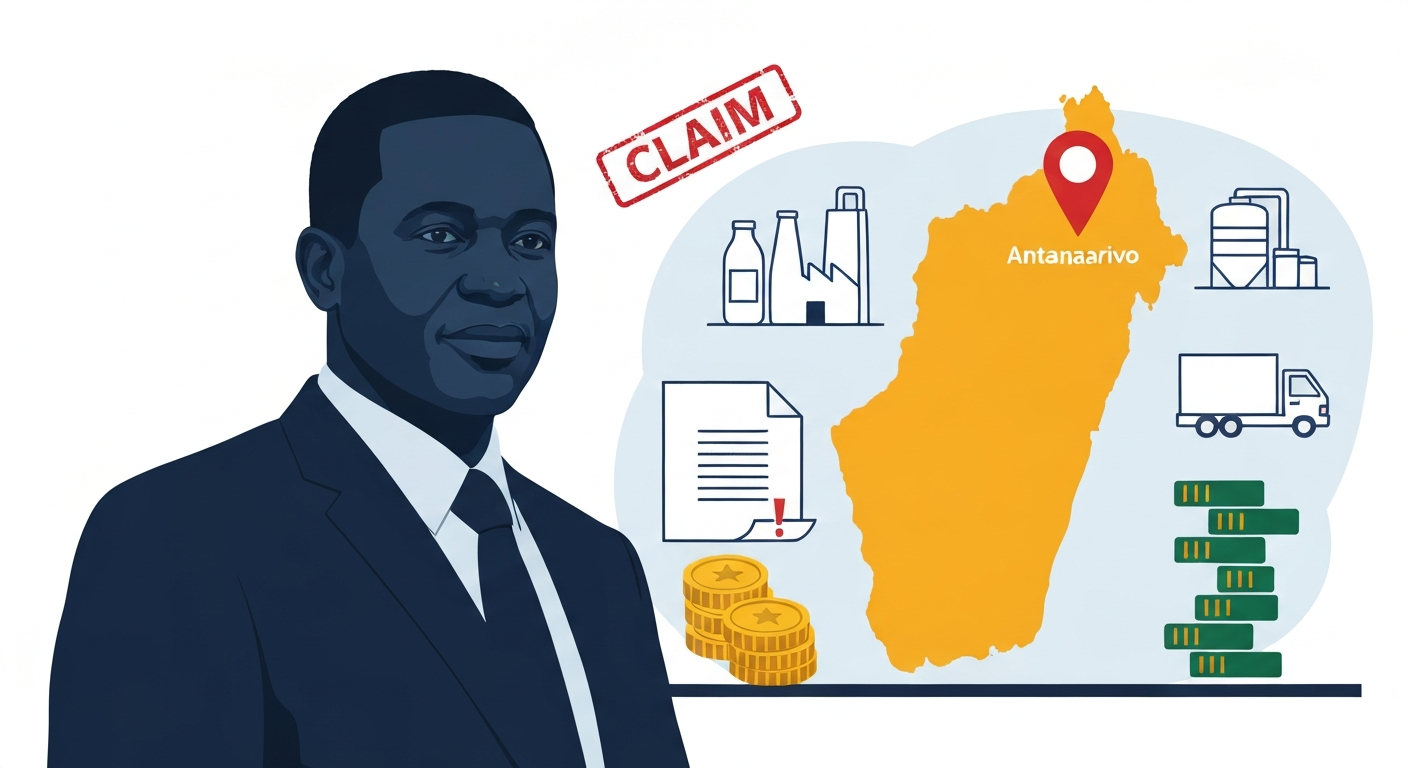
Marc Ravalomanana's net worth as of July 27, 2026 is best described as material but unquantifiable from open sources. Based on available corporate filings, diplomatic reporting, academic research, and Malagasy press coverage, his wealth was historically substantial, built through the vertically-integrated Tiko agro-food conglomerate that dominated Madagascar's dairy, oils, flour, and wholesale distribution sectors before 2009. Post-2009 legal claims, criminal convictions in absentia, government-ordered asset seizures, and tax demands totaling at least US$35 million (with aggregate creditor and fiscal exposure cited as high as US$100 million in some analyses) have materially reduced and complicated any precise valuation. A plausible working estimate for his current net worth sits in the range of US$50 million to US$200 million, with low-to-moderate confidence, reflecting partial business recovery but persistent legal and fiscal drag.
Marc Ravalomanana Net Worth: Estimated Wealth Profile 2026

Quick net worth snapshot
Before diving into the detail, here is the single best summary of where things stand. The figures below are estimates derived from corporate filings, diplomatic cables, academic studies of the Tiko group's pre-crisis scale, and analysis of post-2009 legal claims. There is no publicly available, audited, consolidated balance sheet for Groupe Tiko or Marc Ravalomanana's personal holdings as of this writing, so these numbers carry meaningful uncertainty.
| Item | Detail |
|---|---|
| Best single estimate | ~US$100 million |
| Plausible range | US$50 million to US$200 million |
| Valuation date | July 27, 2026 |
| Estimate basis | Corporate filings (Companies House UK, Pappers France), Malagasy press on Tiko scale, U.S. diplomatic cables, think-tank analysis of legal claims |
| Confidence level | Low-to-moderate (no public audited statements; large contingent liabilities unresolved) |
| Primary currency | U.S. dollars (USD) |
The wide range reflects genuine uncertainty rather than editorial laziness. Aggregator sites display figures for Ravalomanana that swing from trivially small to implausibly large, which tells you more about how those tools work than about his actual wealth. This profile tries to do better by anchoring estimates to documented facts and being honest when the facts run out.
Asset and liability breakdown
Business holdings
The Tiko group remains Ravalomanana's primary wealth vehicle. Before the 2009 political crisis, Tiko was a genuine national champion in Madagascar: a vertically-integrated operation spanning dairy production, edible oils, flour milling, and the Magro wholesale retail chain. Contemporary Malagasy press cited group turnover of roughly 420 billion ariary in pre-crisis years, which at exchange rates of the period equated to approximately US$200 million in annual revenue. The group integrated around 4,000 milk producers across multiple collection centres, according to academic research on the Malagasy dairy sector, underscoring an asset base that included factories, processing plants, cold-chain infrastructure, and contracted agricultural supply networks. Confidence on historical scale: moderate-to-high (corroborated by press, academic studies, and diplomatic reporting). Confidence on current valuations of these assets: low (no consolidated accounts available, partial recovery documented).
A UK-registered company called TIKO LTD (Companies House number 03512489) remains active with annual accounts filed through March 2025 and a confirmation statement through February 2026. A French entity, TIKO SERVICES (RCS Paris, SIREN 903 535 060), was created in October 2021 and has filed accounts for periods ending in 2022 and 2024. These filings confirm that the Tiko brand retains live corporate vehicles in at least two European jurisdictions as recently as 2025-2026. However, neither entity appears to publish consolidated group accounts, so the size of the assets held through them is not determinable from public records alone.
Real estate
At the time of his 2000 presidential candidate wealth declaration, Ravalomanana publicly listed 27 properties as part of his disclosed holdings alongside his Tiko shareholdings. That earlier disclosure establishes a baseline of substantial property ownership. Since then, some assets have reportedly been subject to seizure attempts or liens by Malagasy transitional authorities post-2009. The current status and market value of his real estate portfolio is not determinable from available public sources. Confidence: very low.
Cash and liquid investments
No public information is available on Ravalomanana's cash holdings, bank accounts, or portfolio investments. Periods of exile (2009-2014) and the constraints imposed by criminal convictions in absentia would have complicated international banking access, though this cannot be confirmed from open sources. Any cash estimate would be speculative. Confidence: very low.
Known debts and liabilities
This is the most consequential and best-documented part of the picture. Documented liabilities include: (a) a US$35 million back-tax demand made against the Tiko group by Madagascar's transitional authorities in April 2009, as recorded in U. U.S. embassy Cablegate diplomatic reporting records a US$35 million back‑tax demand against the Tiko group in April 2009. S. embassy diplomatic reporting published via CableGate; (b) aggregate tax and creditor claims cited in post-2009 political economy analyses (including ACCORD) as reaching roughly US$100 million when multiple claims are combined; and (c) criminal fines and potential civil judgments linked to the August 2010 conviction in absentia. Episodic factory and warehouse seizure attempts, physically resisted by Tiko employees in reported incidents, further disrupted liquidity. These liabilities, even if partially settled or disputed over time, are large enough to materially reduce any gross asset figure.
How Marc Ravalomanana built his wealth
Ravalomanana's wealth story begins not in politics but in yogurt. He started as a small-scale dairy products seller in Antananarivo in the 1980s, building a door-to-door distribution operation that grew into the Tiko company. Over roughly two decades, Tiko expanded into edible oils, flour milling, and wholesale retail through the Magro chain, becoming one of Madagascar's largest private employers and agro-food businesses. The company's vertical integration, encompassing farm supply chains, processing, and distribution, gave it scale advantages that were unusual for a sub-Saharan African market of Madagascar's size.
Ravalomanana transitioned from businessman to politician when he ran for Mayor of Antananarivo, winning in 1999. His business success was a central part of his political identity: he presented himself as proof that Malagasy enterprise could succeed without foreign dependency. In 2002 he won the presidential election after a prolonged dispute with incumbent Didier Ratsiraka, and he served two terms as president until the 2009 crisis. His time in office generated significant controversy about the relationship between Tiko and the state, with critics arguing the company benefited from public contracts and regulatory advantages while supporters pointed to broader economic development initiatives.
After being forced from power in 2009 and spending years in exile, Ravalomanana returned to Madagascar. He ran in subsequent presidential elections (2018 and 2023) and publicly worked to restore Tiko's operations. Press reports from the post-exile period document Tiko production resumptions, indicating the group survived the crisis in some form rather than being completely liquidated. His current wealth therefore reflects a substantially rebuilt but still legally encumbered version of the empire he built before 2009.
Timeline: major events and their financial impact
| Year | Event | Financial effect / notes |
|---|---|---|
| 1980s | Starts small dairy distribution business in Antananarivo | Seed of the Tiko enterprise; limited documented wealth at this stage |
| 1990s | Tiko expands into oils, flour, and Magro wholesale chain | Rapid revenue and asset growth; group becomes one of Madagascar's largest private companies |
| 1999 | Elected Mayor of Antananarivo | Political platform enhances business access and visibility; Tiko growth continues |
| 2000 | Presidential candidate wealth declaration filed | Publicly discloses 27 properties and Tiko shareholdings; earliest verifiable personal asset baseline |
| 2002 | Wins presidential election; begins first term | Peak business-political influence; Tiko reportedly benefits from expanded market access and public contracts |
| 2006 | Re-elected for second presidential term | Business empire at or near peak scale; pre-crisis turnover later cited as ~420 billion ariary (~US$200M equivalent) |
| Feb 2009 | Forced from power in military-backed coup; goes into exile | Immediate loss of political protection; Tiko group exposed to hostile transitional government |
| Apr 2009 | Transitional authorities demand US$35M in back taxes from Tiko | Major documented liability; U.S. embassy cable records the government pressure campaign |
| 2009–2010 | Asset seizure attempts; Tiko factories and warehouses subject to liens and physical enforcement | Operational disruption, liquidity crisis; employees physically blocked some seizure attempts |
| Aug 2010 | Convicted in absentia by Antananarivo court; sentenced to life imprisonment with hard labour | Criminal conviction limits freedom of movement and asset repatriation; reputational and legal exposure increases |
| 2010–2014 | Continued exile; multiple creditor and tax claims accumulate | Aggregate claims cited in analyses at ~US$100M; net worth materially reduced from peak |
| 2014 | Returns to Madagascar following political agreements | Begins efforts to restore political standing and Tiko operations |
| 2018 | Runs in presidential election; loses to Andry Rajoelina | Political re-engagement; Tiko production resumptions reported in Malagasy press |
| 2021 | TIKO SERVICES SAS incorporated in France (SIREN 903 535 060) | New European corporate vehicle; suggests ongoing international business activity |
| 2023 | Runs again in presidential election | Continued public profile; no major new asset disclosures identified |
| 2024–2025 | UK TIKO LTD files accounts to March 2025; French TIKO SERVICES files accounts for 2024 | Active corporate maintenance in two European jurisdictions; group not dormant |
| Jul 2026 | Current profile date | Net worth estimated at US$50M–US$200M range; confidence low-to-moderate due to absent consolidated accounts and unresolved liabilities |
Valuation table and asset allocation
The table below presents per-asset estimates with confidence levels. Where no reliable estimate exists, the cell says so rather than inventing a number. The totals are illustrative ranges, not precise accountancy. An accompanying net worth timeline chart or asset allocation pie chart would be genuinely useful for this profile: a suggested image shows a line chart with approximate net worth bands across five periods (pre-2002, 2002-2009, 2009-2014, 2014-2020, 2020-present), and a second image shows a pie chart of gross asset allocation by category (business holdings dominant, real estate secondary, cash and investments uncertain).
| Asset / liability category | Estimated value (USD) | Confidence | Notes |
|---|---|---|---|
| Tiko group business holdings (Madagascar) | US$50M–US$150M (gross) | Low | No consolidated accounts; partial recovery documented; contested by liabilities |
| TIKO LTD (UK) and TIKO SERVICES (France) | Not determinable | Very low | Active filings confirm corporate existence; no public accounts showing asset values |
| Real estate (Madagascar and other) | US$10M–US$30M (estimated) | Very low | 27 properties disclosed in 2000; current status after seizure attempts unclear |
| Cash and liquid investments | Not determinable | Very low | No public information; exile and legal constraints complicate assessment |
| Gross asset subtotal | US$60M–US$180M | Low | Sum of above ranges; dominated by business holdings uncertainty |
| Tax and creditor claims (documented) | -(US$35M to US$100M) | Moderate | US$35M documented in diplomatic cable; up to US$100M cited in aggregate analyses |
| Criminal fines and judgments (2010 conviction) | Unquantified | Low | Conviction in absentia for life imprisonment; civil/financial penalties not publicly specified |
| Net worth estimate (gross minus liabilities) | US$50M–US$200M | Low-to-moderate | Wide range reflects genuine data gaps; best single estimate ~US$100M |
The dominance of business holdings in the gross asset estimate reflects a classic founder-wealth profile: the great majority of value is tied up in an operating company rather than diversified across liquid assets. That concentration amplifies uncertainty in both directions. If Tiko's Malagasy operations have recovered substantially, the real number could sit toward the upper end. If liabilities are treated as fully enforceable, it could compress toward the lower end or below.
Controversies and legal disputes that affect the valuation
The 2009 political crisis and business takeover
When Ravalomanana was forced from power in March 2009, the transitional government led by Andry Rajoelina immediately moved against his business interests. U.S. embassy cables from April 2009 record that transitional authorities were pressuring the Tiko group and sought payment of approximately US$35 million in back taxes. This was not a routine audit: it was a politically-motivated fiscal offensive against the departing president's primary asset. Whether those specific claims were fully enforced, settled, or remain contested is not established in public records available to this profile.
Asset seizures and factory disruptions
Press reporting from 2009 and 2010 documents repeated attempts by transitional authorities to seize or place liens on Tiko factories and warehouses. In at least one documented episode, Tiko employees physically blocked enforcement attempts. These actions disrupted production, constrained cash flow, and effectively froze part of the group's asset base during a critical period. Even where seizures were not completed, the operational disruption and legal uncertainty created lasting damage to the group's earning capacity.
The 2010 conviction in absentia
On August 28, 2010, an Antananarivo court convicted Ravalomanana in absentia and sentenced him to life imprisonment with hard labour for alleged responsibility in the deaths of protesters on February 7, 2009. Madagascar: Former President Sentenced to Jail With Hard Labour - allAfrica (AFP summary, 31 Aug 2010) reports that on 28 August 2010 an Antananarivo court convicted Ravalomanana in absentia and sentenced him to life imprisonment with hard labour. The conviction created significant legal jeopardy that complicated his ability to re-enter Madagascar, manage assets, and engage with international counterparties for several years. While subsequent political reconciliation processes reduced the practical enforcement of this sentence, it has never been formally vacated in the public record available to this profile. Its existence means any asset held in Madagascar remained theoretically subject to judicial action.
Aggregate creditor and fiscal exposure
Post-crisis analyses, including work by ACCORD tracking Madagascar's political transition, cited aggregate tax and creditor claims against Tiko-related entities at figures approaching US$100 million when multiple claims were combined. This is a large number relative to a plausible gross asset estimate for the group, and it is the primary reason why the net worth range in this profile has a wide floor. Even if only a fraction of that exposure is currently enforceable, it meaningfully compresses recoverable net worth below any gross asset figure.
The land deal controversy
While not primarily a financial liability in the direct legal sense, the proposed Daewoo land lease deal, which emerged publicly in 2008 and contributed to the political crisis leading to Ravalomanana's ouster, illustrates how political decisions made during his presidency fed into the collapse of his business position. The reputational and political fallout from that controversy accelerated the conditions that led to the 2009 crisis and its associated wealth destruction.
How to read these estimates
A few questions come up regularly when readers engage with profiles like this one, and it is worth addressing them directly rather than leaving them to guesswork.
All figures in this profile are in U.S. dollars unless stated otherwise. Malagasy ariary figures drawn from historical press are converted at approximate period exchange rates and flagged accordingly. The conversion adds a layer of uncertainty on top of the underlying estimate.
This profile will be reviewed and updated when materially new information becomes available: a public financial disclosure, new corporate accounts that illuminate the Tiko group's consolidated position, a court ruling that resolves or dismisses significant outstanding claims, or credible investigative reporting that adds primary-source data. Absent new information, the figures here represent the best supportable estimate as of July 27, 2026.
Why do estimates vary so widely across sources? Commercial aggregator sites typically use algorithmic models trained on income proxies (reported salaries, endorsement values, media coverage) rather than asset registers. For a figure like Ravalomanana, whose wealth is almost entirely in private operating businesses with no public market valuation, those models produce numbers that can be both wildly high and wildly low depending on what inputs they grab. When you see a figure cited without a source or methodology, treat it as entertainment rather than financial analysis.
The margin of error on the central estimate here is large: plus or minus 50 percent would not be surprising given the data gaps. The confidence grading used in this profile runs from 'very low' (no supporting primary evidence, pure extrapolation) through 'low,' 'moderate,' and 'high' to 'very high' (audited financial statements). Nothing in this profile exceeds 'moderate' confidence, which is an honest reflection of the public record rather than a failure of research effort. For a privately-held, politically-contested business empire in a lower-income country with limited corporate transparency obligations, 'moderate' is genuinely the ceiling available from open sources.
Further reading and related Marc profiles
Marc Ravalomanana is an unusual case on this site: a figure whose wealth is almost entirely tied to a single operating conglomerate in a single country, shaped heavily by political events rather than market performance. For contrast, Marc Vetri's wealth profile represents a different model entirely, built through restaurant entrepreneurship and brand licensing in the U.S. food industry. Marc Savard (the hypnotist) and Marc Savard (the former NHL player) offer two more distinct wealth-building patterns worth comparing if you're interested in how different industries and career structures generate and preserve wealth. For a focused estimate of the former NHL player's wealth, see the Marc Savard net worth profile. See the Marc Savard (the hypnotist) net worth profile for an estimated figure and career context. For a different case study in personal wealth reporting, see the Marc Saulnier net worth profile. Marc Saulnier and Marc-Edouard Vlasic round out the comparison set with profiles from French business and professional hockey respectively. Each of those profiles applies the same methodology used here: anchor to documented facts, acknowledge uncertainty, and avoid inventing precision that the public record doesn't support.
Summary and confidence statement
Marc Ravalomanana built one of Madagascar's most significant private business empires from scratch, turned it into a political platform, and then spent more than a decade navigating the legal and financial fallout from losing power. As of July 27, 2026, his net worth is best estimated at approximately US$100 million, within a range of US$50 million to US$200 million, reflecting partial business recovery but persistent uncertainty from unresolved liabilities. That estimate carries low-to-moderate confidence. The core problem is structural: there are no public consolidated audited accounts for Groupe Tiko, the asset base is concentrated in illiquid private operating businesses, and documented legal and fiscal claims remain large relative to any plausible gross asset figure.
This profile will be updated when new primary-source information becomes available, including any court rulings on outstanding claims, new corporate filings that illuminate consolidated group finances, or credible investigative reporting from Madagascar. Readers who locate primary financial disclosures or official court records relevant to Tiko group valuations are encouraged to flag them; this is exactly the kind of profile where community knowledge can improve public understanding of a genuinely opaque situation.
FAQ
What is Marc Ravalomanana’s net worth as of the publication date?
There is no single definitive public figure. Based on available open‑source evidence (company filings in the UK and France, Malagasy press, diplomatic reporting and independent analyses), the best‑evidence conclusion is: historically substantial business‑linked wealth (pre‑2009 peak) but materially reduced and indeterminate post‑2009 due to legal, tax and creditor claims. Therefore we state: Net worth — indeterminate from public records; historically material but currently unquantifiable. Confidence level: Low (open‑source gaps; no consolidated audited group accounts). Key sources: Companies House, Pappers, Malagasy press, U.S. diplomatic cables, ACCORD analysis.
Why can’t you give a single numeric net‑worth figure?
No publicly available consolidated audited financial statements or market valuations for the Ravalomanana/Tiko group were located. Asset ownership is fragmented across jurisdictions and contested legally; there are documented large tax/creditor claims and criminal convictions that affect asset realisability. Numeric estimates on commercial aggregator sites are inconsistent and rely on proprietary assumptions rather than primary records, making any single open‑source headline unreliable.
What is the plausible range or best‑estimate headline you can offer?
Because primary data are incomplete and contingent liabilities are large and disputed, we do not publish a speculative single numeric range. The defensible statement from evidence is: pre‑2009 operating scale implies corporate value at national significance; post‑2009 legal/tax claims (documented US$35M claim and analyses citing up to ~US$100M of claims) and seizures materially reduce recoverable net assets. Any numeric range would be highly assumption‑dependent.
What specific assets are known or documented?
Documented asset categories and examples from public records and reporting: - Corporate holdings: UK‑registered TIKO LTD filings and French 'Tiko Services' filings (public registries). - Operating assets (historical): factories, dairy collection centres, processing plants, Magro wholesale/retail outlets (reported in Malagasy press and academic studies). - Real estate: multiple properties were disclosed in early candidate asset declarations; local press reported property portfolios. - Human/capital infrastructure: integrated supply chain with thousands of contracted farmers (academic sector studies). Note: public registries show entity presence but do not provide consolidated book or market values.
What documented liabilities and legal actions affect the estimate?
Key documented legal and fiscal issues: - 2009–2010 transitional government actions including public tax claims and attempts to seize Tiko assets; contemporaneous U.S. diplomatic reporting cites a ~US$35M back‑tax demand. - 2010 conviction in absentia (reported 28 Aug 2010) for alleged responsibility in 2009 events, with life sentence reported — affects legal exposure though enforcement and appeals context varies. - Independent analyses cite aggregate tax/creditor claims in the order of ~US$100M across multiple claims. - Episodes of asset seizure attempts and contested enforcement actions reported in press. These reduce liquidity and the ability to freely repatriate or sell assets.
How did Ravalomanana build his wealth?
Main pathways documented in public sources: - Entrepreneurship: founder and owner of the Tiko group, a vertically integrated agro‑food and distribution conglomerate (dairy, oils, flour/milling, Magro wholesale chain). - Business growth: expansion into processing, distribution and contracted agricultural supply chains (academic reports cite integration of ~4,000 milk producers). - Political career: election as President of Madagascar in 2002 provided political influence that coincided with business prominence. The combined private business footprint and state role underpin the historical scale of his wealth.

Marc Saulnier net worth estimated $3–5M (2026): career summary, assets, income breakdown, sources and recent updates.
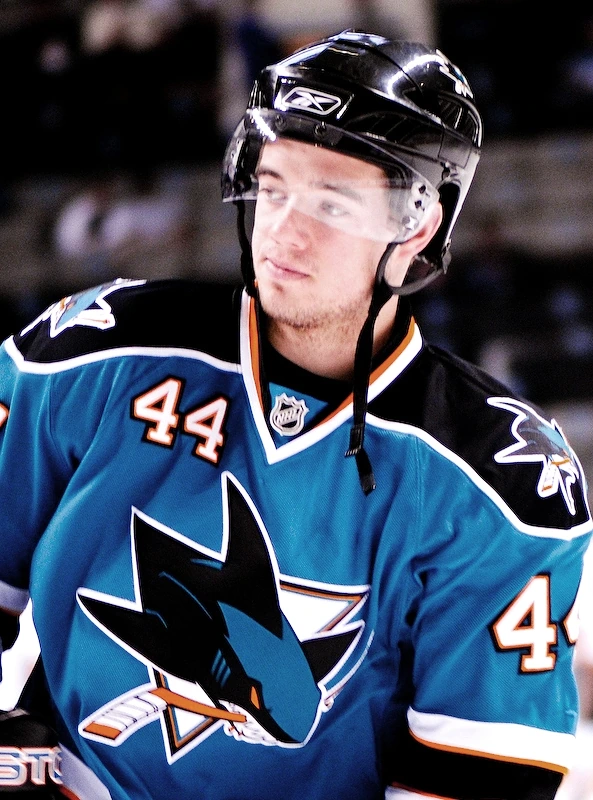
Marc-Edouard Vlasic net worth estimate and method: sources, asset valuation, uncertainty, and how it may change.
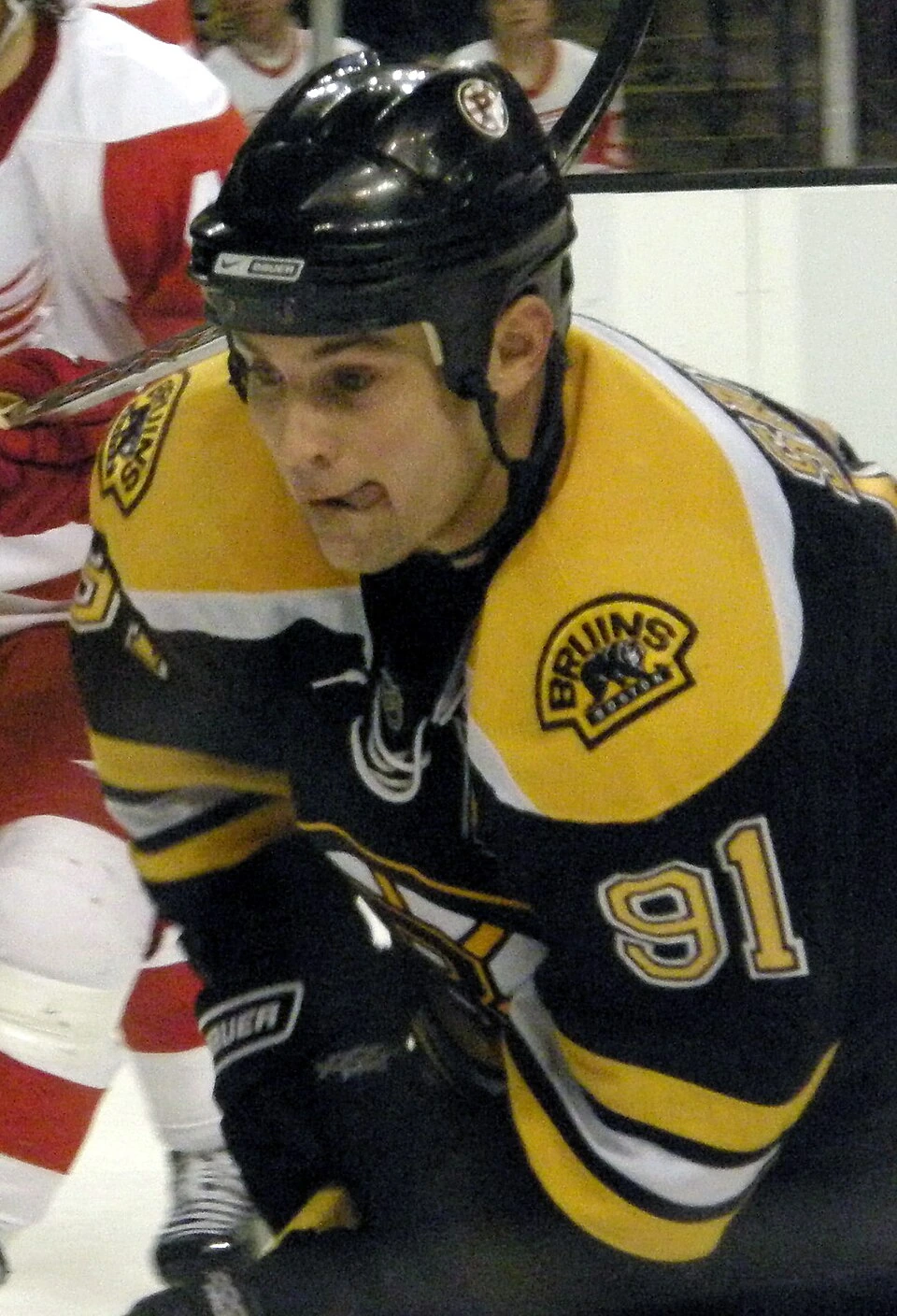
Estimate Marc Savard net worth range, how it’s calculated from career earnings and assets, plus ways to verify.